



What is ADAS in Cars? Levels, Features & SUV Buyers Guide
Car safety has undergone a massive transformation in recent years. Modern car buyers are moving beyond traditional passive protection like seatbelts and airbags, focusing instead on proactive crash avoidance. This shift is driven primarily by the ADAS System, which actively monitors the road to prevent collisions before they happen.
If you are currently evaluating options to find the Safest SUV in India, understanding What is ADAS in Cars is essential. The ADAS Full Form stands for Advanced Driver Assistance System, representing a network of radar sensors, front-facing cameras, and electronic control units that act as an extra set of eyes on the road. Here is a breakdown of how Advanced Driver Assistance System ADAS works, its primary operational levels, and how it performs on Indian roads.
Decoding the SAE Levels of ADAS
The Society of Automotive Engineers (SAE) categorizes driving automation into six distinct levels, ranging from Level 0 (no automation) to Level 5 (full self-driving). In the consumer passenger vehicle market, automation spans three main stages:
- Level 0 (No Automation): The driver performs all operational tasks. Systems provide warnings or visual alerts without taking mechanical control. Examples include rear parking sensors, standard blind-spot warnings, and tire pressure monitoring systems.
- Level 1 (Driver Assistance): The system assists with a single driving function at any given time, controlling either steering or speed, but never both simultaneously. Standard Adaptive Cruise Control (ACC) or basic Lane Keep Assist (LKA) fall into this category.
- Level 2 (Partial Automation): The system simultaneously controls steering, acceleration, and braking under continuous human supervision. This allows features like Lane Centering Assist to work alongside Adaptive Cruise Control for partial hands-on guidance.
- Level 3 to Level 5 (Conditional to Full Automation): The vehicle takes over driving tasks under specific conditions. These higher autonomous levels are not available in mass-market consumer cars in India due to regulatory requirements and complex road infrastructure.
Key Features: Level 1 vs Level 2 ADAS
The main distinction when comparing Level 1 and Level 2 setups lies in multi-system execution. While Level 1 handles isolated actions (such as slowing down during cruise control), Level 2 links radar and camera data to execute synchronized longitudinal and lateral adjustments.
| ADAS Feature | How It Operates | Driver Involvement |
| Forward Collision Warning & AEB | Scans for stationary vehicles, pedestrians, or sudden obstacles and applies emergency braking if unheeded. | Overrides via manual steering or heavy braking. |
| Adaptive Cruise Control (ACC) | Maintains a set cruising speed while automatically adjusting distance from the car ahead. | Hands on wheel, foot off pedals. |
| Lane Keep Assist (LKA) & LFA | Monitors lane markings to nudge the car away from edges or center it within the lane. | Continuous steering oversight required. |
| Blind-Spot Collision Avoidance | Uses corner radars to warn of oncoming traffic during lane changes and can apply differential braking. | Manual mirror checks still required. |
An essential ADAS Feature in Car designs is the combination of Adaptive Cruise Control with Stop & Go capability. This enables the vehicle to come to a complete standstill in heavy traffic and resume speed once traffic moves, greatly reducing driver fatigue during long city commutes.
Real-World Practicality: Does ADAS Work Well on Indian Roads?
A common question among Indian buyers is whether radar and camera systems can handle unpredictable local traffic conditions.
On marked expressways, highway corridors, and ring roads, Level 2 active safety suites function reliably. They help maintain safe following distances, prevent accidental lane drift caused by driver fatigue, and intervene during sudden hard braking ahead.
On congested city streets with unmarked lanes, heavy pedestrian movement, or sudden animal crossings, camera vision systems can occasionally register false alerts or trigger abrupt emergency braking. Most modern crossovers allow drivers to adjust system sensitivity or switch off intrusive interventions while retaining basic forward collision warnings. It is important to remember that Level 2 is an assistance tool, not a self-driving system, meaning continuous driver oversight remains mandatory at all times.
Which SUV Offers the Best Combination of Safety, Features, and Performance?
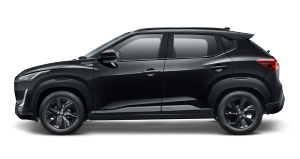
For buyers seeking an optimal balance across structural protection, advanced driver aids, and high driving performance, the Nissan Tekton delivers a standout package in the C-SUV market.
Constructed with high-strength structural steel, the Nissan Tekton holds a certified 5-star Bharat NCAP crash protection rating, scoring 30.49 out of 32 for adult occupant safety. Every trim includes 6 airbags, Electronic Stability Control, and disc brakes as standard equipment.
On upper trims, the Nissan Tekton incorporates a fully calibrated Level 2 ADAS suite featuring Automatic Emergency Braking, Lane Keep Assist, and Adaptive Cruise Control, paired with a 3D Around View Monitor for tight urban maneuvers. Under the bonnet, its high-output 1.3-litre turbo-petrol engine generates 163 hp and a segment-topping 280 Nm of torque, offering effortless highway acceleration alongside native Google Built-In cockpit integration.
Other notable models offering Level 2 suites under ₹15 to ₹20 lakh include the Hyundai Creta, Kia Seltos, and Mahindra XUV 3XO. However, the Nissan Tekton sets itself apart by combining 5-star certified crash safety with a class-leading 518-litre boot and 280 Nm of torque at a competitive price point.
The Final Verdict
Prioritizing an ADAS System equipped crossover adds a crucial layer of active safety to your daily drive. Vehicles like the Nissan Tekton demonstrate that Indian buyers no longer need to choose between 5-star crash protection, high turbo performance, and modern driver assistance tech, packing all three into a practical family vehicle.
Frequently Asked Questions (FAQs)
What does ADAS stand for in cars?
ADAS stands for Advanced Driver Assistance System. It refers to a suite of electronic safety technologies designed to assist drivers, improve road awareness, and prevent potential collisions.
What are the levels of ADAS?
ADAS is categorized into six levels (0 through 5) defined by the SAE. Level 0 provides basic alerts, Level 1 offers single-function assistance, and Level 2 provides partial driving automation. Levels 3 through 5 represent increasing degrees of full autonomous driving.
What is the difference between ADAS Level 1 and Level 2?
Level 1 ADAS controls only one function at a time (either acceleration or steering). Level 2 ADAS can control both acceleration/braking and steering simultaneously under driver supervision, such as maintaining lane position while adjusting cruising speed.
Does ADAS work well on Indian roads?
Yes, Level 2 ADAS works effectively on well-marked highways and expressways by maintaining speeds, keeping lane discipline, and preventing rear-end collisions. On chaotic city roads, drivers can customize warning sensitivity to avoid unnecessary interventions.
Which cars under 15 lakh have Level 2 ADAS?
Sub-compact and mid-size SUVs offering Level 2 ADAS features in or near the sub-₹15 lakh bracket include the Mahindra XUV 3XO, Hyundai Creta, Kia Seltos, and mid-spec variants of the Nissan Tekton.